Blog · · 2 min read
Flexibility for Aerialists and Pole Dancers
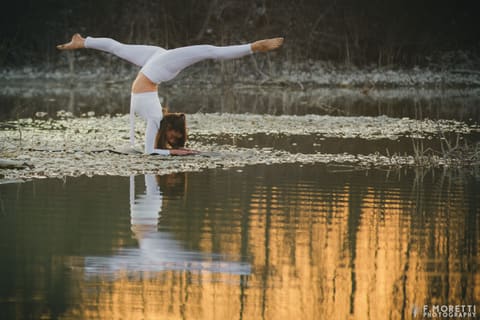
I work with many aerialists and pole dancers. They are usually strong, brave and used to hard training. What they need from me is rarely motivation. It's structure, and flexibility they can control.
In aerial and pole, flexibility and line can decide a performance or a competition. And unlike on a yoga mat, in the air there is nothing underneath you to sink into.
Flexibility you can use in the air
On the floor, a split can be passive: gravity pulls you down and you relax into it. On a pole or a hoop, the same shape has to be held. Your legs have to stay in line on their own, often while you hang, spin or change grip.
That's active flexibility: strength in the range you have. It's what makes a line look effortless and what keeps you safe in it.
The shoulders come first
Aerial and pole put enormous demands on the shoulders. Mobility matters, but strength and stability in that mobility matter more.
One of my clients, a pole dance instructor, came to me with a painful shoulder. During our handstand training, her shoulder became strong and stable enough that almost all of the pain disappeared. After six months she was balancing on her hands in various shapes, and that stability and strength carried over into her pole: she became significantly stronger and more confident in pole handstands and in elements that demand a lot from the shoulders and upper body.
Many goals, clear priorities
Most aerialists and pole dancers I work with come with several goals at once: a front split, a middle split, a deeper backbend, a stronger handstand. Training them all at full intensity at the same time is a fast way to stall. Part of my job is to set clear priorities and an order that makes sense for your body and your season.
Learn to breathe in the stretch
The same pole instructor says she finally learned to enjoy the feeling of stretching through proper breathing in our private flexibility sessions. She reached her full splits in three months, after years of trying and giving up out of frustration.
This is where yoga gives you an advantage over a typical stretching routine. Conscious breathing, a steady Ujjāyī breath, never holding the breath in a stretch: that is how your nervous system learns to let go.
New to yoga?
If you come from dance, gymnastics, aerial or pole and you're new to yoga, my Advanced Beginner Flow in the online community was made for you. It moves at a slightly faster pace with less detailed explanation, because you already have good body awareness and coordination, and it includes two breathing techniques, Ujjāyī and Nāḍī Śodhana.
Progress takes time, and that's part of the process. But with structure, it comes.