Blog · · 2 min read
Breathing in the Stretch: How Prāṇāyāma Deepens Flexibility
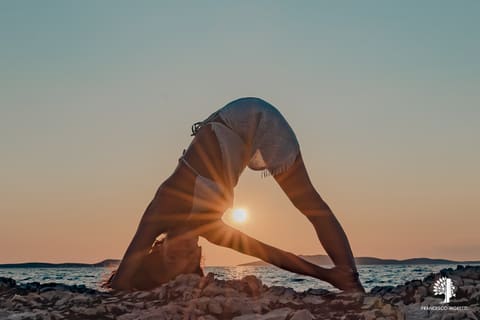
Watch someone in a deep stretch and you'll often see the same thing: a clenched jaw, raised shoulders, and no breath at all. It looks like effort. In fact, it is the body bracing against the stretch.
The main focus of any stretching routine should be conscious breathing. This is where yoga gives you a real advantage over a typical stretching routine.
Why the breath matters in a stretch
When you first get deeper into a pose, it isn't usually your muscles that have changed. It's your nervous system. The longer you stay in a static stretch, the more opportunity your nervous system has to release tension. Over time you enter the poses more easily and with less resistance. The tissues adapt as well, but more slowly.
Holding your breath sends the opposite signal. It tells the body something is wrong, and the body holds on. A steady, calm breath tells it that it is safe to let go.
That's why I ask my students never to hold their breath in a stretch, and to keep a steady, gentle Ujjāyī breath throughout the practice.
What prāṇāyāma means
Prāṇāyāma joins prāṇa, breath or life force, with āyāma, extension. It is the practice of working with the breath consciously: lengthening it, guiding it, and sometimes holding it on purpose.
The techniques in my classes
Three-part breathing. Slow breathing into the belly, ribs and chest. It calms the nervous system and builds awareness of your natural breathing patterns. A good place to start.
Ujjāyī. The ocean breath: a gentle, audible breath that creates a smooth rhythm through the whole practice. In flexibility work, it's the breath you stay with.
Nāḍī Śodhana. Alternate nostril breathing, which helps balance the nervous system.
Kapālabhāti. A fast abdominal breath that generates heat and strengthens the respiratory muscles, which support the spine in movement.
Breath and backbends
In backbends the breath does even more. Breathwork builds control in the intercostal muscles between the ribs and activates the deep core muscles that support the spine. The more control you have over your breath, the easier it is to keep length in the upper back instead of collapsing into the lower back.
That's why my backbend classes start with breathwork, and why I say: don't skip it. In the Naṭarājāsana class, for example, an equal-ratio Ujjāyī breath and Kapālabhāti with breath retention prepare the nervous system and the core before the deep backbends begin.
Your breath is your guide
Only go as far as your breath allows. If you lose the ability to breathe smoothly as you move into a position, that is your red flag. Come back to where your breath is calm, and go deeper from there.
If you're new to breathwork, learn the gentle techniques first, before stronger ones like Kapālabhāti and breath retention. In my community, they're in the beginner course for exactly that reason.