Blog · · 3 min read
Am I Too Old for Arm Balances? Starting After 40
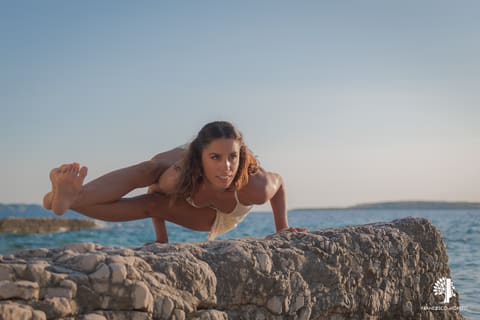
I hear this question in many versions. Am I too old? Too heavy? Too stiff? Did I start too late? Behind all of them is the same fear: that arm balances belong to young, bendy bodies, and everyone else can only watch.
In my experience, the only real obstacles are limiting beliefs and inconsistency. Both can be trained.
What age changes, and what it doesn't
Age is one of the things that shape your starting point, together with your training history, your strength and how often you practice. It can affect how quickly you build strength and range, and how much recovery you need between sessions. That is worth respecting.
What age doesn't change is the nature of arm balances. They are skills, and like any skill they are learned step by step, fastest with individual feedback. Nobody is born knowing how to balance on their hands.
Arm balances are skills, not tricks
The great thing about arm balances is that they all revolve around similar principles. That's why it makes sense to practice them together: you start to understand the mechanics underneath. They build strength, but they also require active flexibility and coordination, and those develop through experimentation, problem-solving and play.
This is good news at any age. You don't need extreme strength or flexibility to start. You need the right order.
Where to start
Your first arm balances. In my intermediate course the first ones are tuck headstand and crow pose. Both build balance, strength and coordination, and both teach you the basic mechanics you'll use later. If you have a neck injury, skip the headstands.
Learn how to come down. Fear of falling holds people back more than weakness. The body has its own mechanisms to save itself, and part of the practice is becoming aware of them and using them consciously. Learn your exits before you chase the balance.
Progressions, not attempts. We find what's missing, build it in the right order, and remove the fear with safe bailouts and clear progressions. Throwing yourself at the full pose again and again only teaches you to fall.
Consistency over intensity. A short practice a few times a week will take you further than one exhausting session.
If you have an injury or a health condition, start with that conversation. When I work with someone one-on-one, I adapt the program to injuries and pain, and I'll tell you honestly if you need to see a doctor or a physiotherapist first.
The days it doesn't work
Arm balances are a lot of fun, but they can also be frustrating, because they don't always work on the first try. Sometimes it feels like you've got it, and then comes a day when it's just not there. That's part of the journey. The body and the mind change from day to day, and the practice is there to help you observe what is, without judgment and with patience.
These poses invite presence and ask you to meet your fears. That often carries over into everyday life. With clients who start from the very beginning, I often see that the biggest change goes far beyond what shows in a photo: more courage, calm and confidence.
So no, you're not too old. The question is only where you start, and whether you keep showing up.