Blog · · 2 min read
Krama Vinyāsa: Why Sequencing Beats Strength
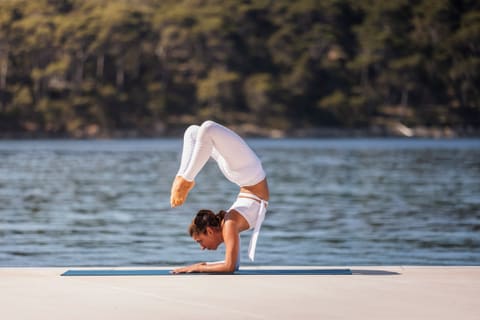
Most practitioners don't lack strength. They lack a clear path. That's the idea at the heart of my method, which is built on Krama Vinyāsa: intelligent sequencing in which every movement prepares the body for the peak pose.
What the name means
Krama comes from the root kram, to step. It means a step, a progression, an order in which things follow one another.
Vinyāsa means placing something in a particular way: an arrangement. In yoga, it's the art of linking poses.
Put together, krama vinyāsa is a sequence arranged step by step toward a goal. In practice, a peak-pose flow.
What a krama vinyāsa looks like
Take my Wheel Pose Flow, for example. It doesn't start with Wheel. It starts with breathwork, which builds control in the intercostal muscles and switches on the deep core that supports the spine in backbends. Then comes a detailed warm-up, then preparatory poses like Puppy Pose, Kapyāsana and Camel, which build the strength needed for deeper backbends. Only then does the sequence lead naturally into Ūrdhva Dhanurāsana.
My Naṭarājāsana class follows the same logic, just longer: shoulder flexibility, backbend and hip preparation, Sun Salutations, standing balances, split work, and only then the flipped grip, followed by restorative poses that bring the spine back into balance.
Every part has a job. Nothing is there to fill time.
Why it beats strength
You can force your way into a pose with strength. Sometimes it even works. But forcing is where strain and injuries come from, and it rarely holds the next time.
When the sequence is right, the peak pose arrives as the logical end of the practice. The body has been prepared for exactly what the pose demands, systematically, without unnecessary strain or risk of injury. It often feels easier than you expected, because by then it is.
At the advanced level, sequencing matters even more. The difference between intermediate and advanced yoga is largely in the vinyāsa: the transitions that connect two or more poses, and the coordination and endurance they require.
How to apply this in your own practice
- Choose one peak pose for the session.
- Ask what it needs. Shoulders, hips, backbend, hamstrings, balance, strength? For King Dancer, for example, ask how flexible your shoulders are in flexion, how mobile your hips are and how deep your backbend is.
- Order the preparation from general to specific: breath and warm-up first, then the poses that open and strengthen exactly what the peak pose needs.
- Reach it, then settle. Try the peak pose a few times, then settle down with movements that counterbalance it.
In my experience, both with students of all builds and in my own practice, smart sequencing is the fastest way to the pose you want, with significantly less recovery time and a lower risk of injury.